


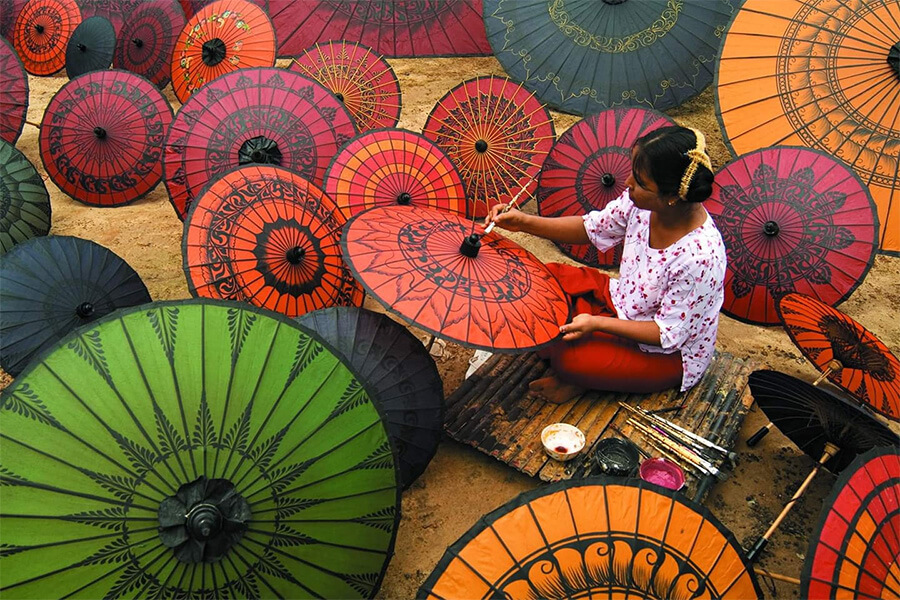
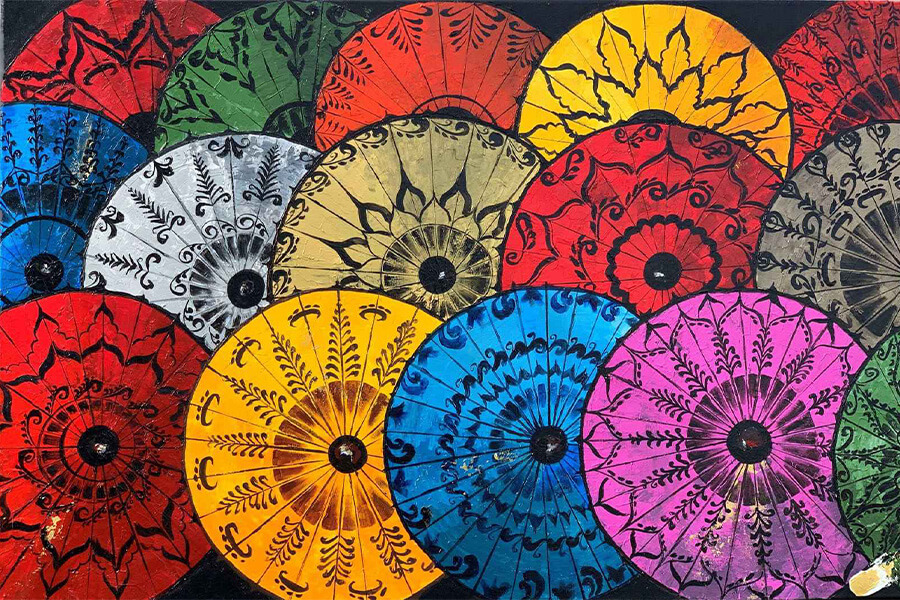
Nestled in the lush Ayeyarwady Delta, Pathein Umbrellas stand as exquisite symbols of Myanmar’s rich artisanal heritage. These vibrant, handcrafted creations blend functionality with breathtaking artistry, featuring delicate paintings of flowers, birds, and intricate patterns that evoke the country’s natural beauty and cultural depth. For travelers seeking meaningful mementos during their myanmar vacation packages, Pathein Umbrellas offer far more than protection from sun and rain. They embody centuries of skill, community pride, and timeless elegance.
Whether displayed as home decor or carried on daily adventures, each Pathein Umbrella tells a story of dedication passed through generations. This article explores their fascinating origins, meticulous creation process, diverse styles, and where to acquire authentic pieces, drawing from firsthand observations during numerous journeys through Myanmar’s delta region.
The History Behind Traditional Pathein Hti Craftsmanship
The story of Pathein Umbrellas is deeply intertwined with Myanmar’s royal past and the resilience of its artisans. Known locally as Pathein hti, these umbrellas represent a living tradition that has evolved from elite symbols to cherished national treasures.
How the handmade umbrella village first began
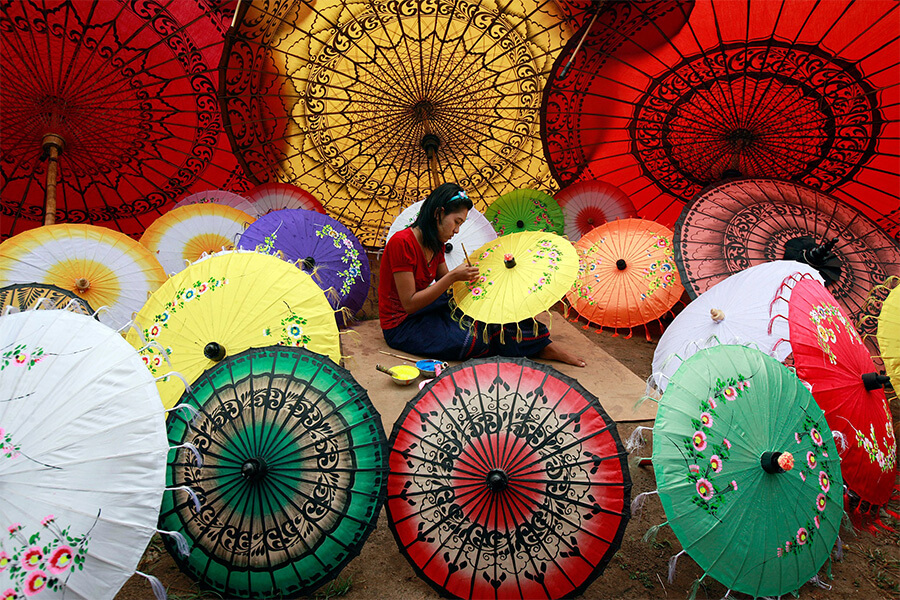
The origins of Pathein Umbrellas trace back more than 130 years to the late 19th century. Following the British annexation of Upper Burma and the exile of King Thibaw Min in 1885, skilled royal craftsmen dispersed across the country. One master artisan, U Shwe Sar, renowned for creating elaborate umbrellas for the royal court, relocated to Pathein around 1914 along with fellow artisans. Pathein, a riverside town in the Ayeyarwady Delta, provided ideal conditions with abundant bamboo and a supportive local community.
What began as an adaptation of palace techniques quickly flourished in this fertile region. Initially crafted primarily from paper, the early Pathein hti incorporated local materials and innovations suited to the tropical climate. In my visits to Pathein, elders shared how U Shwe Sar’s workshop became the nucleus of a new craft village. Families gathered to learn the trade, transforming a royal art into a communal livelihood. This migration not only preserved ancient skills but also adapted them to everyday needs, laying the foundation for what we now celebrate as authentic Pathein Umbrellas.
Generations of families preserving the Pathein Umbrella trade
The continuity of Pathein Umbrellas owes much to multigenerational family workshops. Fathers teach sons, mothers guide daughters, and knowledge flows seamlessly across decades. These families guard trade secrets, from selecting the perfect bamboo to mixing natural glues. In one prominent Pathein workshop I observed, three generations worked side by side. The grandfather shaped handles with decades-honed precision, while grandchildren learned basic rib assembly.
Preservation efforts face modern challenges, including competition from cheaper imports and urbanization. Yet dedicated artisans remain committed. Community initiatives and growing tourism interest have revitalized interest among younger generations. During my conversations with local makers, they expressed quiet pride in maintaining standards that honor their ancestors. This familial dedication ensures Pathein hti retains its distinctive character, resisting mechanization and preserving the human touch that defines true craftsmanship.
From daily use to national souvenir
Originally, Pathein Umbrellas served practical purposes in daily life and religious contexts. In traditional Burmese society, the hti symbolized protection, status, and spiritual significance. Monks carried them during alms rounds, and they featured prominently in festivals and ceremonies. Over time, their role expanded. As Myanmar opened to the world, visitors discovered the beauty of these hand-painted creations and began taking them home as souvenirs.
Today, Pathein Umbrellas grace temples, weddings, and cultural events nationwide. They appear in traditional dances, processions, and even modern interior design. Their transformation into a national icon reflects broader appreciation for Myanmar’s intangible cultural heritage. Travelers often remark on how owning one connects them personally to the country’s story. From humble beginnings in a delta town to recognition as a treasured export, Pathein Umbrellas have become ambassadors of Myanmar’s artistic soul.
How Pathein Umbrellas Are Made Step by Step
Creating a single Pathein Umbrella demands patience, skill, and intimate knowledge of natural materials. The entirely handmade process can take several days per piece, with each stage requiring careful attention to detail. Having watched artisans at work on multiple occasions, I remain awed by their mastery.
Cutting bamboo frames by hand
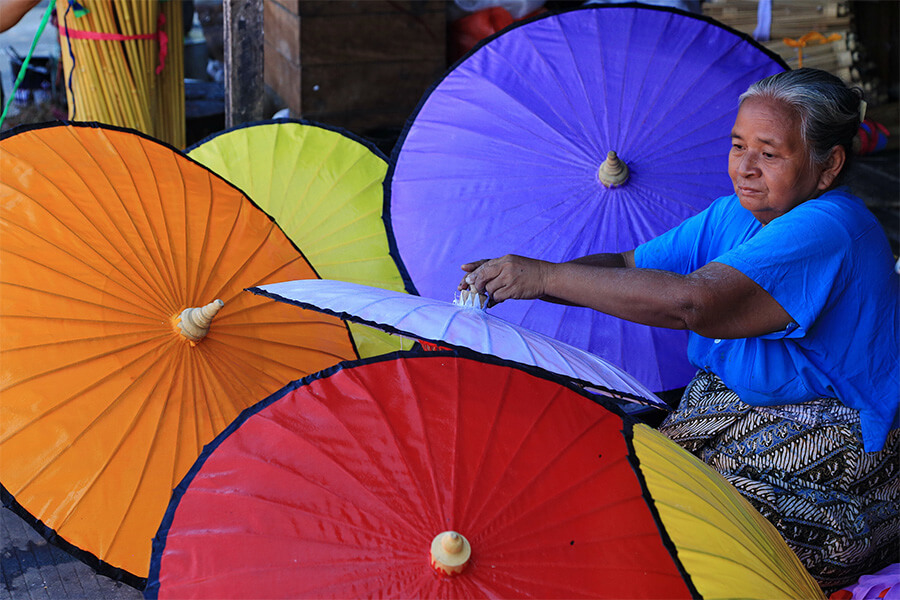
The foundation of every Pathein Umbrella lies in carefully selected bamboo. Artisans prefer locally grown Thara Khu bamboo for its flexibility and strength. Workers first harvest mature stalks, then split and shave them into precise ribs and a central shaft using simple hand tools. Each rib must match in length and thickness to ensure balanced opening and closing.
This initial stage sets the umbrella’s durability. Skilled hands smooth edges to prevent splintering, then shape the wooden handle and crown from sturdy Ma Tu Shwe Wa wood. Precision here is critical. A poorly cut frame leads to structural weakness. In workshops, I noted how experienced craftsmen inspect each piece under natural light, discarding any that fail to meet exacting standards. This labor-intensive start underscores why genuine Pathein Umbrellas outlast mass-produced alternatives.
Stretching cotton or paper over the ribs
Once the frame assembles, artisans stretch the canopy material. Traditional options include cotton cloth or special paper, both treated for weather resistance. Natural glue, often derived from cassava root or rice flour, secures the fabric to the bamboo ribs. Workers apply the material in careful layers, pulling it taut to eliminate wrinkles while maintaining even tension.
For waterproof versions, multiple coatings of natural lacquer or oil follow. This step transforms fragile materials into resilient covers capable of withstanding Myanmar’s monsoon rains and intense sunlight. The process requires teamwork. One artisan holds the frame while another smooths the fabric. Watching this coordination reveals the quiet rhythm of the craft, where years of practice enable fluid, efficient movements.
Hand painting flowers birds and geometric patterns
The true magic of Pathein Umbrellas emerges during painting. Artists use fine brushes and natural pigments to create vibrant scenes. Common motifs include lotus flowers symbolizing purity, peacocks representing royalty, birds in flight, and elegant geometric designs. Some pieces incorporate folklore narratives or regional landscapes.
Each umbrella receives individualized attention. No two are identical, even within the same workshop. Painters work with steady hands, layering colors to achieve depth and luminosity. This stage can take days, as paint must dry between applications. In my experience visiting family workshops, painters often described their work as meditative, connecting them to both nature and cultural stories. The resulting artwork elevates Pathein hti from functional object to wearable canvas.
Drying under the sun before the final finish
After painting, umbrellas dry naturally under the Pathein sun. This crucial step allows pigments to set and lacquer to harden, enhancing color vibrancy and durability. Artisans rotate pieces periodically to ensure even exposure, protecting them from sudden rains that could ruin hours of effort.
Final finishing includes varnishing, attaching decorative elements, and testing the mechanism. Workers apply additional protective layers to the handle and ribs. Only after thorough inspection do the Pathein Umbrellas receive approval for sale. This sun-drying tradition ties the craft to the local climate, making Pathein’s environment integral to production quality.
Popular Types of Pathein Umbrellas You Will See
Pathein Umbrellas come in various forms suited to different purposes. Understanding the main types helps travelers select pieces that match their needs and aesthetic preferences.
Small decorative umbrellas for souvenirs
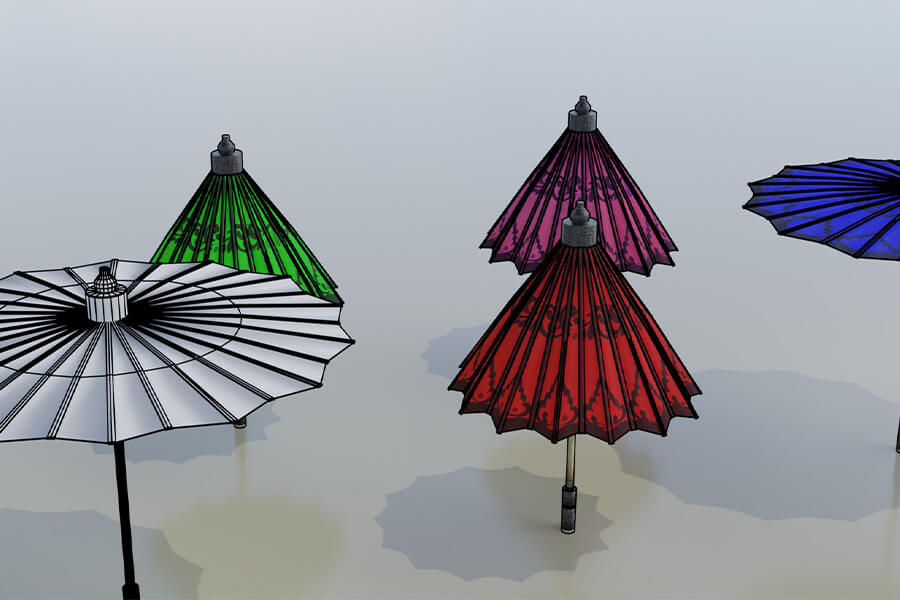
Compact and charming, these miniature Pathein Umbrellas serve primarily as keepsakes. Measuring around 12 to 17 inches when open, they feature elaborate paintings scaled to their size. Travelers frequently purchase them to adorn walls, use as lampshades, or gift to loved ones. Despite their small scale, artisans maintain the same painting quality and attention to detail.
These decorative versions often showcase the brightest color palettes and most intricate motifs. Many visitors I met during delta explorations chose them for their portability and visual impact. They capture the essence of Pathein Umbrellas without the bulk of full-sized models, making them ideal travel companions.
Classic Pathein hti for sun and rain protection
The traditional full-sized Pathein hti remains the most practical choice. Designed for everyday use, these umbrellas provide excellent coverage against Myanmar’s tropical sun and seasonal rains. Constructed with robust bamboo frames and treated cotton canopies, they offer reliable performance while displaying artistic beauty.
Users appreciate their lightweight nature and smooth opening mechanism. In rural areas and cities alike, locals carry them daily. For tourists, they serve as both functional accessories and stylish statements. From my own use during humid journeys, these classic models prove remarkably durable, often lasting years with proper care.
Large parasols used for festivals temples and photos
Oversized Pathein Umbrellas create dramatic visual statements at events. These grand parasols, sometimes exceeding several feet in diameter, feature expansive painted surfaces and reinforced structures. They appear in temple processions, weddings, traditional dances, and photography sessions.
Monasteries and cultural venues frequently employ them for ceremonial shading. Their imposing presence enhances festive atmospheres while providing substantial coverage. Photographers particularly value them as props that add authentic Myanmar flair to portraits. Witnessing these large parasols in use during festivals revealed their power to transform ordinary spaces into vibrant cultural displays.
Where to Buy Authentic Pathein Umbrellas in Myanmar
Finding genuine Pathein Umbrellas enhances the travel experience and supports local artisans directly. Focus on traditional production areas for the best selection and quality.
Workshops and family factories in Pathein
The heart of production remains Pathein itself. Family-run workshops scattered throughout the town welcome visitors. Iconic spots like the Shwe Sar workshop allow guests to observe every stage of creation. Artisans happily demonstrate techniques and explain material choices.
Purchasing directly from these sites ensures authenticity and often better prices. Many workshops offer customization options, such as specific colors or motifs. In my repeated visits, I found the personal interactions most rewarding. Buyers can watch their chosen umbrella progress through final stages, creating lasting memories alongside the physical product.
Local markets and handicraft shops
Beyond workshops, Pathein’s local markets and dedicated handicraft stores stock wide selections of Pathein Umbrellas. Yangon and Bagan also feature reputable outlets carrying authentic pieces sourced from delta producers. These venues provide convenient shopping for travelers with limited time in Pathein.
Market bargaining remains common, though fair prices reflect the labor involved. Quality varies, so inspect items carefully. Established shops often provide certificates of authenticity or background information about the makers. Combining market visits with workshop tours offers a comprehensive understanding of the trade.
How to tell a handmade Pathein Umbrella from mass produced ones
Distinguishing authentic Pathein Umbrellas requires attention to several details. Genuine pieces exhibit slight natural variations in painting and structure, reflecting individual artisan work. Look for hand-stitched or carefully glued seams, irregular but artistic brushstrokes, and natural bamboo textures.
Mass-produced versions typically show uniform machine-like precision, synthetic materials, and faded or overly glossy finishes. Authentic Pathein hti feel substantial yet lightweight, with smooth mechanisms and vibrant, light-fast colors. The scent of natural lacquer and bamboo often lingers on fresh pieces. When in doubt, ask sellers about the production process. Reputable sources gladly share details and demonstrate features.
Supporting handmade Pathein Umbrellas preserves an irreplaceable cultural practice. Each purchase contributes to family livelihoods and encourages continued transmission of skills to future generations. Whether acquiring a small decorative piece or a full-sized classic, these gorgeous creations bring a tangible piece of Myanmar’s heritage into your life.
In conclusion, Pathein Umbrellas transcend mere accessories. They represent the enduring spirit of Myanmar’s artisans, the beauty of traditional craftsmanship, and the warmth of delta communities. Exploring their history, witnessing their creation, and selecting authentic examples enriches any journey through this remarkable country. As you plan future travels, consider how these hand-painted treasures can deepen your connection to Myanmar’s living culture. Their timeless appeal ensures Pathein Umbrellas will continue captivating hearts for generations to come.