


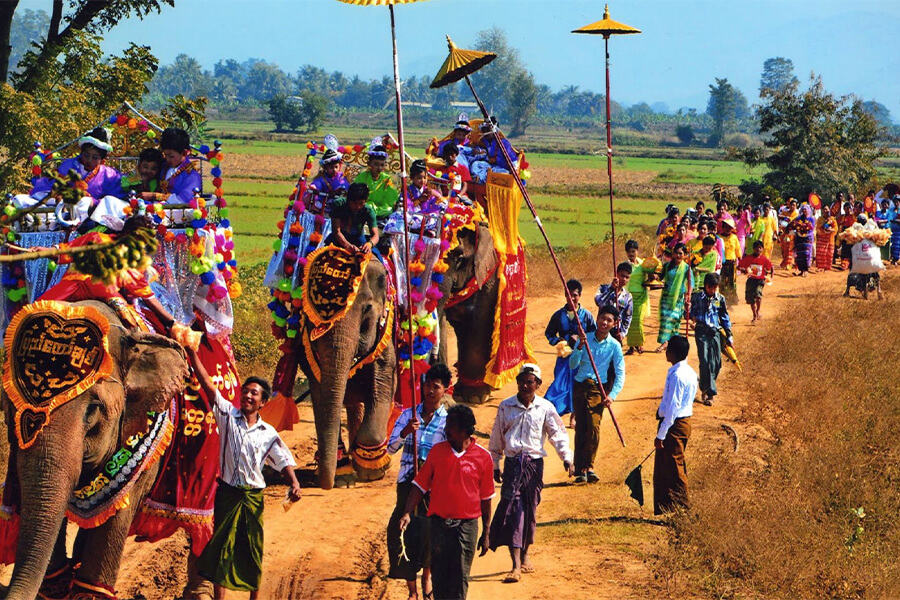
In the vibrant tapestry of Burmese culture, few events carry the emotional weight and spiritual significance of the shin pyu. This ancient ritual marks a young boy's temporary entry into monastic life as a novice monk, embodying deep Buddhist values of renunciation, merit-making, and family devotion. For travelers seeking authentic cultural immersion, including a glimpse of the shin pyu can transform any journey into a profound experience. Many visitors discover these living traditions through carefully curated myanmar tour packages that blend iconic sites with local ceremonies.
Having witnessed multiple shin pyu ceremonies across Myanmar over the years, I can attest to their power to connect participants with the country's spiritual heart. The shin pyu ceremony, also known as the novitiate ceremony, remains the most cherished rite in Burmese families, blending solemn tradition with joyous celebration. This article explores its origins, steps, festive elements, locations, and etiquette to help you appreciate and respectfully engage with shin pyu myanmar.
The Origins of the Shin Pyu Ceremony in Burmese Buddhism
The shin pyu traces its roots directly to the life and teachings of Gautama Buddha within Theravada Buddhism, the dominant school practiced in Myanmar. This ritual allows families to accumulate merit by allowing their sons to emulate the Buddha's path of renunciation, even if only for a short period. In a society where Buddhism permeates daily life, the shin pyu serves as both a religious obligation and a cultural cornerstone.
The story of Prince Siddhartha and the first renunciation
The foundation of the shin pyu lies in the story of Prince Siddhartha Gautama, who later became the Buddha. At age 29, Siddhartha left his luxurious palace life, his wife Yasodhara, and newborn son Rahula to seek enlightenment. He cut his hair with his sword, exchanged his royal robes for simple ascetic garments, and began his spiritual quest. This act of renunciation symbolizes the rejection of worldly attachments in pursuit of truth.
In the shin pyu, young boys reenact this pivotal moment. The first historical novitiate is often linked to Rahula himself, whom the Buddha ordained as the initial novice monk. Parents in Myanmar view the ceremony as a way to offer their sons a similar spiritual inheritance, far more valuable than material wealth. This connection instills a sense of continuity between ancient teachings and contemporary practice, reminding participants that enlightenment remains accessible through discipline and detachment.
How the novitiate ceremony became a national ritual
Over centuries, the shin pyu ceremony evolved into a defining national tradition in Myanmar. Theravada Buddhism arrived in the region during the Pyu city-states and flourished under the Bagan Kingdom in the 11th century. Kings and commoners alike embraced the practice, with royal chronicles documenting grand shin pyu events sponsored by monarchs to earn merit for the kingdom.
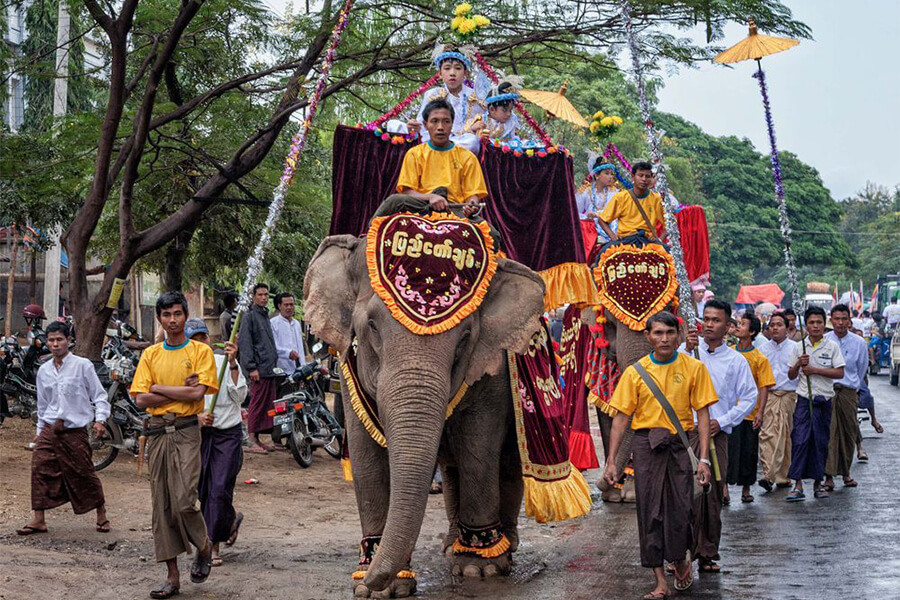
The ritual spread widely during the Konbaung Dynasty, becoming accessible to all social classes. Monasteries served as centers of education and community life, reinforcing the novitiate ceremony as essential for moral development. Today, it stands as one of the Twelve Auspicious Rites in Burmese culture, performed by nearly every Buddhist family. Its endurance reflects Myanmar's resilient spiritual identity, even through periods of historical change.
Shin pyu as a rite of passage for young boys
For Burmese boys, typically between ages 8 and 20, the shin pyu represents a key rite of passage. It signals the transition from childhood to greater responsibility while allowing them to live briefly as novices, learning Buddhist precepts, meditation, and monastic discipline. Parents gain immense merit, believed to improve their karma and ensure family prosperity.
In my travels, I have seen how this experience shapes young participants. Boys often return home more respectful and mindful, carrying lessons from monastery life. The shin pyu fosters community bonds, as entire villages or neighborhoods rally to support the family. Unlike permanent ordination, most novices return to lay life after days, weeks, or months, but the memory and merit endure lifelong.
Step by Step Inside a Traditional Shin Pyu Ceremony
Participating in or observing a traditional shin pyu offers an intimate window into Burmese devotion. The ceremony unfolds in distinct phases, each rich with symbolism and emotion. From my firsthand experiences attending these events in rural and urban settings, the sequence blends preparation, public display, and sacred transformation.
Preparing costumes makeup and golden royal outfits
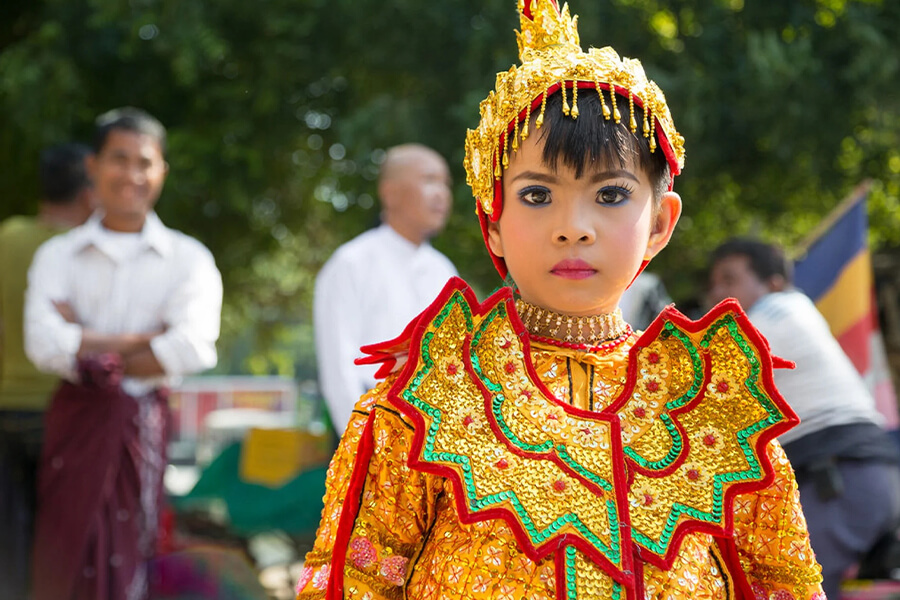
Preparations begin weeks in advance. Families commission elaborate princely costumes that mirror the attire of young Prince Siddhartha. Boys wear shimmering golden robes, intricate headdresses, jewelry, and makeup to accentuate their youthful features. These outfits, often rented or handmade, feature vibrant silks, embroidery, and accessories like ceremonial swords or fans.
Makeup artists apply traditional thanaka paste and colorful cosmetics to give the boys a regal, almost ethereal appearance. Parents spare no expense, viewing the investment as an offering. In one memorable shin pyu I observed near Mandalay, a family transformed their modest home into a bustling atelier, with relatives sewing late into the night. This phase builds anticipation and highlights the boy's elevated status for the day.
The colorful street procession through the neighborhood
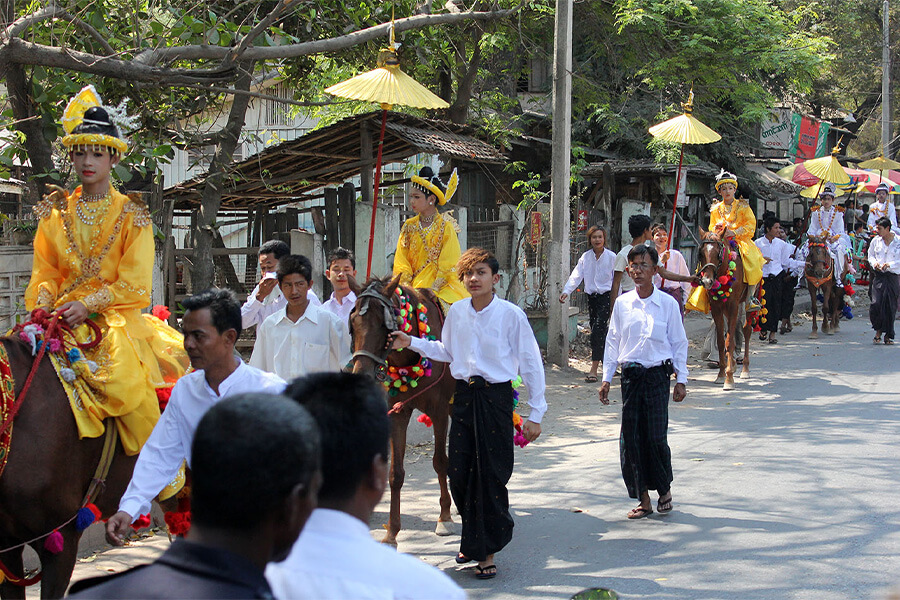
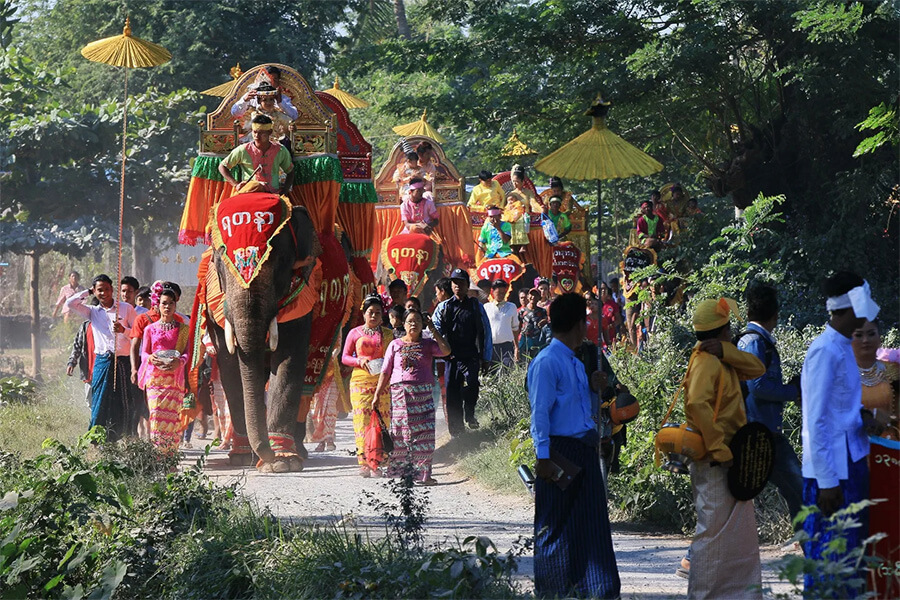
The highlight for many spectators is the lively procession, known locally as shinlaung hlè pwe. The boy, dressed as a prince, rides atop a decorated horse, elephant, or ornate palanquin carried by relatives. Musicians play traditional instruments while dancers perform energetic routines. Family and friends follow in their finest attire, carrying offerings such as monastic robes, alms bowls, and lotus flowers.
The colorful street procession winds through neighborhoods, drawing cheers and blessings from onlookers. Firecrackers may pop, and crowds gather to share in the joy. This public display symbolizes the boy's departure from worldly life, much like Siddhartha leaving the palace. The energy is infectious, turning ordinary streets into a vibrant festival corridor.
Hair shaving ritual and offering robes at the monastery
Upon reaching the monastery, the tone shifts to solemnity. The boy sits before the abbot as his head is shaved, a powerful symbol of renouncing vanity and attachments. Parents kneel nearby, holding white cloth to collect the fallen hair as a keepsake. Tears often flow, mixing joy with the bittersweet reality of temporary separation.
Next comes the offering of robes. The boy formally requests the monastic garments from the monks, then changes into the simple saffron or maroon robes. He receives the alms bowl and other requisites. This moment marks the core of the novitiate ceremony, where the boy takes the Ten Precepts, pledging to live by monastic rules.
Becoming a novice monk for the first time
With robes donned and precepts accepted, the boy officially becomes a novice monk, or koyin lay. He joins other novices in the monastery, learning chants, meditation, and daily routines like morning alms rounds. The transformation is profound: from princely splendor to humble discipline. Families feel immense pride, knowing their son now walks in the Buddha's footsteps, even briefly.
In practice, the duration varies. Some boys stay only days, others longer during school breaks. This first experience often plants seeds for future ordinations or lifelong devotion.
The Festive Side of Shin Pyu Myanmar Families Food and Celebration
While spiritually deep, the shin pyu bursts with festivity that rivals major life events. Burmese families pour heart and resources into celebrations that strengthen community ties and create lasting memories.
Music dancing and community gatherings
Music and dance animate the shin pyu ceremony. Traditional saing orchestras featuring drums, gongs, and xylophones fill the air. Professional dancers in colorful costumes perform classical Burmese routines or lively folk dances. Community members join processions or gather at the family home for entertainment.
These gatherings foster unity. Neighbors contribute food, time, and labor, turning the event into a collective expression of support. In villages, the entire population may attend, sharing stories and laughter long into the night.
Home cooked feasts shared with relatives and neighbors
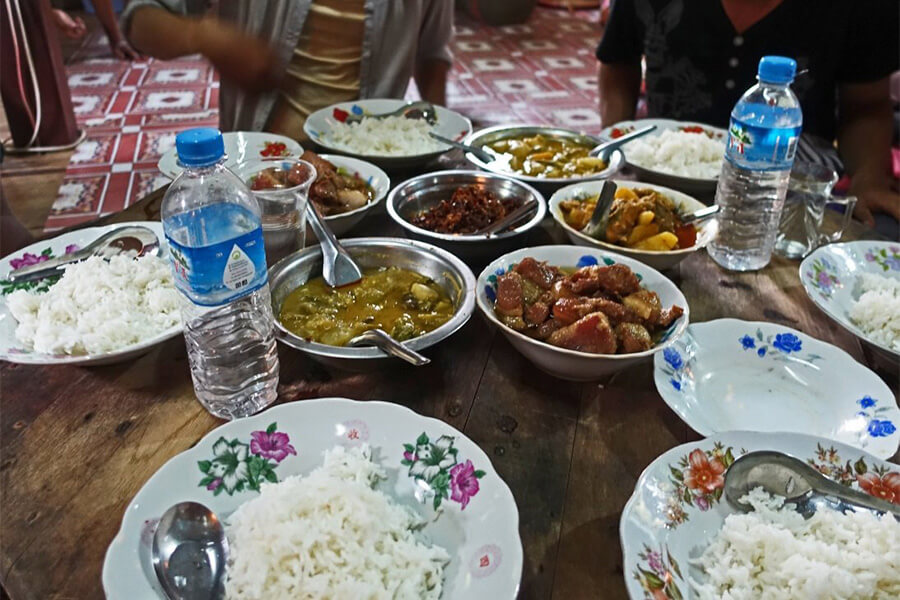
Food plays a central role in honoring guests and accumulating merit. Families prepare lavish spreads of traditional Burmese dishes: mohinga noodle soup, various curries, salads, and sweets like mont lone yay baw. Relatives cook for days, serving hundreds in shifts. Vegetarian options respect monastic influences, though meat dishes appear for lay guests.
Sharing these home cooked feasts reinforces social bonds. In my experience, the generosity impresses visitors, as hosts insist on second and third helpings. The abundance symbolizes abundance in merit and prosperity.
Why the shin pyu ceremony feels like a wedding day
Many compare the shin pyu to a wedding because of its scale, expense, and emotional intensity. Parents invest significantly, viewing it as their primary duty to their son. The pride, tears, and communal joy mirror marital celebrations. Families send invitations, hire professionals for music and decor, and capture moments in photographs.
This similarity underscores its importance in Burmese life. Like a wedding, it marks a transition and celebrates continuity of family and faith. The atmosphere blends solemn ritual with exuberant festivity, leaving participants uplifted.
Where Travelers Can Witness an Authentic Shin Pyu Ceremony
Travelers interested in the shin pyu myanmar can find authentic experiences beyond tourist circuits. Timing matters, as ceremonies peak during school holidays, around Thingyan (April), and Buddhist Lent (July to October).
Monasteries and villages around Yangon
Yangon offers accessible entry points. Monasteries near Shwedagon Pagoda frequently host shin pyu, with processions circling the sacred stupa. Nearby villages in the Yangon region, such as those in Thanlyin or Hlaing Thar Yar, preserve more intimate, traditional versions. Local guides can connect visitors with upcoming events through community networks.
Mandalay and central Myanmar towns
Mandalay stands as a hub for elaborate shin pyu. The Mahagandhayon Monastery in Amarapura often sees multiple ceremonies, while Inwa and Sagaing feature village-based events with horseback processions. Central towns like Bagan, Pyay, and Meiktila provide opportunities to witness rural traditions where families maintain older customs.
In my journeys, Mandalay events stood out for their grandeur and accessibility, allowing respectful observation from nearby vantage points.
Tips for respectfully attending a novitiate ceremony
To witness the shin pyu ceremony meaningfully, plan ahead. Contact monasteries or join cultural tours for invitations. Arrive early, dress appropriately, and follow local customs. Small donations to the monastery or family show appreciation. Avoid disrupting rituals, and learn basic phrases like "mingalaba" for greetings. With sensitivity, travelers gain deeper insights into Burmese spirituality.
Cultural Etiquette When Observing a Shin Pyu Ceremony
Respectful behavior ensures positive interactions and honors the sacred nature of the event. Myanmar people appreciate visitors who demonstrate cultural awareness.
What to wear inside monasteries
Modest attire is essential. Men and women should wear long pants or longyi (traditional sarong) with shirts covering shoulders and upper arms. Remove shoes and socks before entering monastery grounds. Avoid bright colors or revealing clothing that might distract from the ceremony.
Photography dos and don’ts
Photography adds value when done thoughtfully. Always ask permission from families and monks before taking pictures. Refrain from using flash during rituals, especially the hair shaving or ordination. Never photograph monks from behind or in compromising positions. Focus on capturing the spirit of celebration rather than intrusive close-ups.
How to interact politely with monks and families
Greet monks with a respectful wai (bow with palms together) and avoid physical contact, as monks maintain strict precepts. Speak softly and listen more than talk. Offer compliments on the boy's courage or the family's generosity. If invited to share a meal, accept graciously but eat lightly to leave food for others. Express thanks sincerely, perhaps with a small gift like fresh fruit for the monastery.
These gestures build goodwill and enrich your understanding of the shin pyu.
The shin pyu encapsulates the essence of Burmese identity: devotion, community, and the pursuit of inner peace. Whether observed through myanmar tour packages or spontaneous village encounters, this novitiate ceremony leaves an indelible mark. Its blend of ancient origins, vibrant processions, heartfelt feasts, and spiritual depth continues to thrive in modern Myanmar. For those fortunate enough to witness it, the shin pyu offers not just a cultural spectacle but a profound reminder of life's impermanence and the value of compassion. As you plan your travels, prioritize experiencing this living tradition to truly connect with the soul of the Burmese people.