
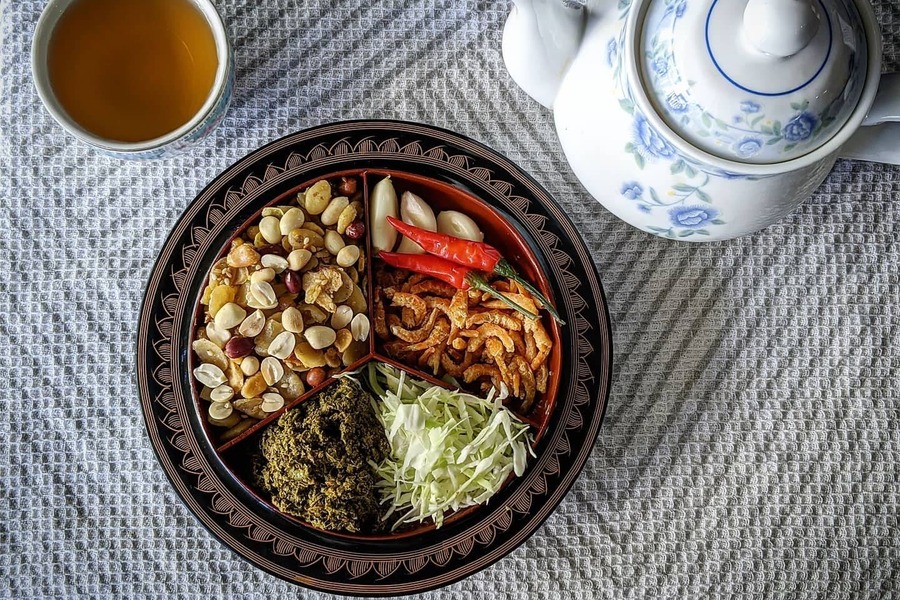
Few dishes capture the spirit of a country as vividly as lahpet thoke does for Myanmar. This fermented tea leaf salad, tangy, crunchy, and layered with contrasting textures, is far more than street food; it is a cultural institution served at family gatherings, business meetings, and festive celebrations alike. Travelers exploring Myanmar tours quickly discover that no trip through Yangon, Mandalay, or Bagan feels complete without sitting down to a plate of this iconic salad. In this guide, we'll break down what makes the dish so special, its essential ingredients, how to prepare it at home, and where to find the most authentic versions across the country.
What Is Lahpet Thoke?
Lahpet thoke is Myanmar's most celebrated dish, a tangy, crunchy, and deeply savory salad built around fermented tea leaves. Unlike most salads that rely on fresh greens as their base, myanmar lahpet thoke uses tea leaves that have been steamed and buried underground or packed tightly for weeks or months to ferment, developing a distinctive earthy sourness found nowhere else in Southeast Asian cuisine. For travelers exploring Myanmar tours, tasting this dish is often considered a rite of passage, an edible introduction to the country's culture, hospitality, and centuries-old culinary traditions.
The word "lahpet" translates roughly to "green tea leaf," while "thoke" means "salad" or "mixed by hand." Together, they describe both the preparation method and the soul of the dish: ingredients tossed together with bare hands to combine textures and flavors in a single satisfying bite. What makes this salad remarkable is its balance of contrasts, sour and salty, crunchy and soft, spicy and nutty, all working in harmony.
Beyond its taste, lahpet thoke carries deep cultural weight. Fermented tea leaves have long symbolized peace and reconciliation in Myanmar. Historically, when two rival groups or families needed to settle a dispute, sharing a plate of pickled tea leaves signified the end of conflict. Even today, the dish is served at weddings, funerals, festivals, and everyday family meals, making it far more than a snack. It is a thread that connects Myanmar's past to its present.
For first-time visitors, understanding this dish means understanding a piece of Burmese identity itself.
What Are Lahpet Thoke Ingredients?
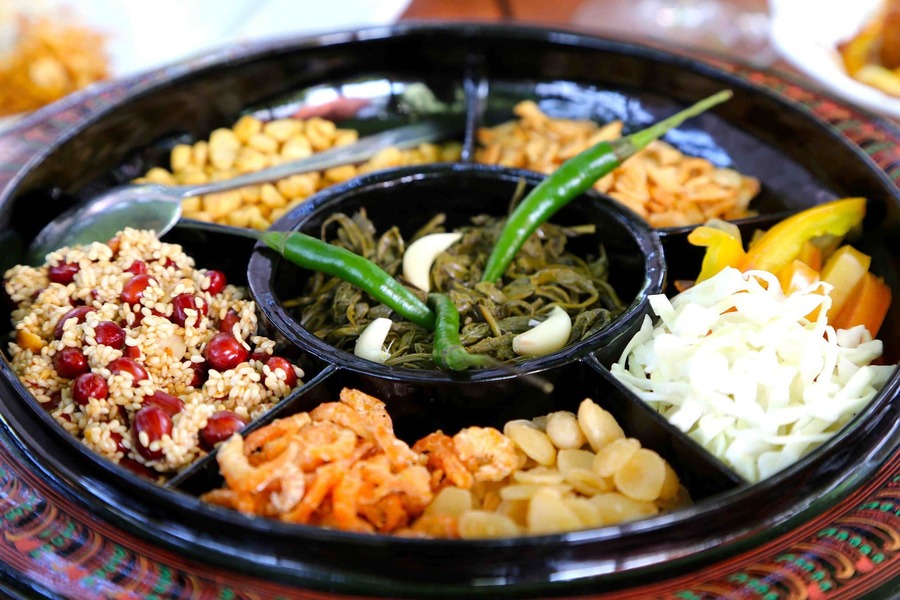
Knowing the core lahpet thoke ingredients helps travelers appreciate the craftsmanship behind each plate, whether ordered at a roadside tea shop or a fine dining restaurant in Yangon. While recipes vary slightly by region and household, the following components form the backbone of an authentic version.
Fermented Tea Leaves
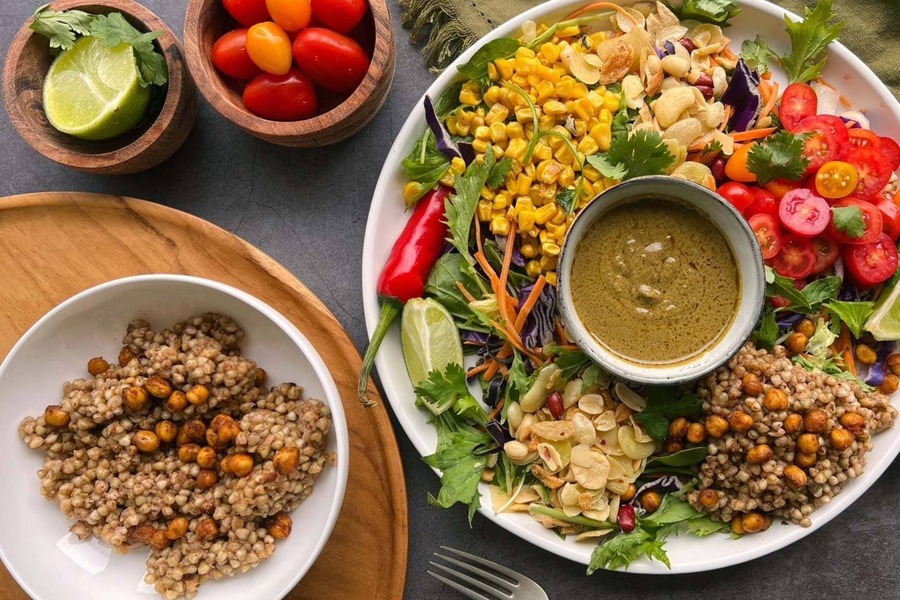
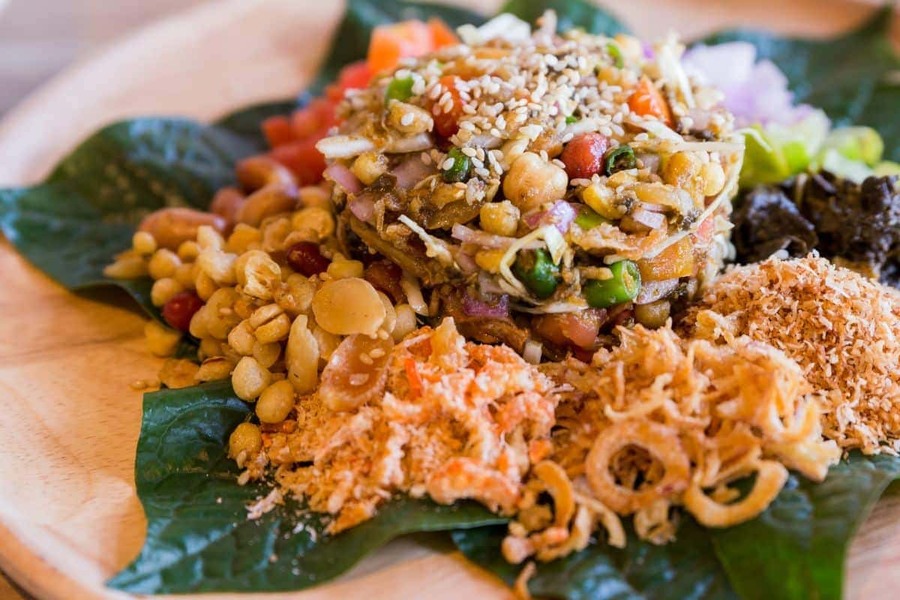
The star ingredient is, unsurprisingly, the fermented tea leaf itself. Young tea leaves are handpicked, steamed to soften them, then packed into bamboo baskets or underground pits where they ferment for weeks. This process gives the leaves their signature tangy, slightly bitter, umami-rich flavor. Quality fermented tea leaves should smell earthy and pleasantly sour, never sharp or overly acidic, which is often a sign of poor fermentation or added preservatives.
Fried Beans and Peanuts
A generous mix of crispy fried yellow split peas, chickpeas, and peanuts adds essential crunch and nutty depth. In many households, these are fried fresh daily to preserve their texture, since stale or soggy beans can ruin the overall experience of the salad.
Sesame Seeds
Toasted white or black sesame seeds contribute a subtle nuttiness and visual appeal. They are typically sprinkled generously over the top just before serving.
Garlic Chips
Thinly sliced garlic, fried until golden and slightly crisp, delivers a fragrant, savory punch. Some vendors fry garlic in the same oil used for the beans, allowing the flavors to blend before assembly.
Tomatoes and Cabbage
Fresh diced tomatoes and shredded cabbage provide juiciness and a light, refreshing crunch that balances the intensity of the fermented tea leaves. Some versions also include shredded carrots for added color and sweetness.
Fresh Chili and Lime
Sliced green chilies bring heat, while a squeeze of fresh lime juice brightens the entire dish, cutting through the richness of the fried elements and enhancing the tea leaves' natural tang.
Fish Sauce (Optional)
A small drizzle of fish sauce or a pinch of salt is sometimes added to round out the umami flavor, though many home cooks prefer to let the fermented tea leaves speak for themselves without extra seasoning.
How to Make an Authentic Lahpet Thoke Recipe
For travelers who fall in love with this dish during their trip, recreating an authentic lahpet thoke recipe at home is entirely possible with the right ingredients, many of which are now available through Asian grocery stores or online specialty retailers.
Preparing the Fermented Tea Leaves
Authentic fermented tea leaves can be purchased pre-packaged from Myanmar markets or specialty importers, since the traditional fermentation process takes weeks and is difficult to replicate outside the region. Once purchased, the leaves are typically rinsed lightly and mixed with a touch of sesame oil, minced garlic, and a splash of fish sauce to soften their intensity and create a cohesive base flavor before combining with other ingredients.
Mixing the Salad
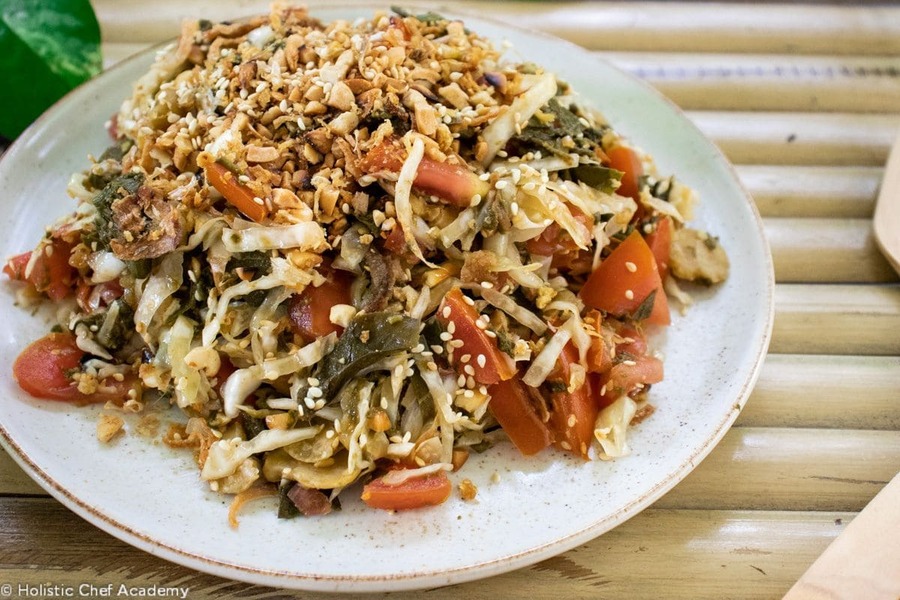
Traditionally, all ingredients are combined in a large bowl and mixed by hand rather than with utensils. This technique allows the cook to feel the texture and adjust proportions instinctively, a skill passed down through generations. Start by tossing the seasoned tea leaves with shredded cabbage and diced tomatoes, then fold in the fried beans, peanuts, and garlic chips. Finish with sesame seeds, sliced chili, and a squeeze of lime, tasting and adjusting the balance of sour, salty, and spicy as you go.
Serving Tips
Lahpet thoke is best served fresh, immediately after mixing, so the fried elements retain their crunch. It pairs wonderfully with a cup of Myanmar's famous milk tea or plain green tea, which helps cleanse the palate between bites. Many families serve it as a starter or side dish alongside rice and curry, though it is hearty enough to enjoy on its own as a light meal.
Where to Eat the Best Lahpet Thoke in Myanmar
Experiencing this dish in its home country adds a layer of authenticity that no homemade version can fully replicate. Here is where travelers can find the most memorable versions across Myanmar.
Tea Shops
Myanmar's ubiquitous tea shops, found on nearly every street corner in Yangon and Mandalay, are the most traditional setting to enjoy a lahpet thoke salad. These informal, bustling spots serve the dish alongside sweet milk tea, and locals often linger for hours chatting over plates of pickled tea leaves. Ordering here offers genuine insight into everyday Burmese social life.
Local Restaurants
For a slightly more refined presentation, local restaurants across major cities often serve elevated versions of the dish, sometimes with premium ingredients like extra roasted nuts or house-fermented tea leaves. These establishments are ideal for travelers wanting a comfortable dining environment while still enjoying authentic flavors.
Street Food Stalls
Street vendors, particularly around markets in Yangon's downtown area or near Mandalay's Zegyo Market, sell freshly prepared portions wrapped in banana leaves or packed in small containers. This casual, on-the-go option is popular among locals during lunch breaks and reflects how deeply the dish is woven into daily routines.
Travelers joining organized Myanmar tours often find that local guides know the best hidden spots, small family-run tea shops or unmarked stalls beloved by residents, that rarely appear in guidebooks but consistently serve the most authentic plates.
The Price Of Lahpet Thoke Salad
Pricing for lahpet thoke varies depending on location and presentation. At street food stalls and traditional tea shops, a plate typically costs between 1,000 and 2,500 Myanmar kyat, making it one of the most affordable authentic dishes travelers can try. Local restaurants in tourist areas may charge slightly more, ranging from 3,000 to 6,000 kyat, especially when the dish includes premium add-ins like extra nuts, prawns, or higher-grade fermented tea leaves.
In upscale restaurants or hotel dining rooms in Yangon and Mandalay, prices can reach 8,000 to 12,000 kyat, reflecting both the setting and refined preparation. Regardless of price point, the dish remains accessible to nearly every traveler's budget, which is part of why it has become such a beloved culinary symbol across Myanmar.
Frequently Asked Questions About Lahpet Thoke
What is lahpet thoke made of?
Lahpet thoke is made primarily of fermented tea leaves combined with fried beans, peanuts, sesame seeds, garlic chips, shredded cabbage, diced tomatoes, fresh chili, and a squeeze of lime. Some variations include a small amount of fish sauce or dried shrimp for added depth.
Is lahpet thoke vegetarian?
The base recipe can absolutely be vegetarian, since the core ingredients, tea leaves, beans, peanuts, vegetables, and sesame seeds, contain no meat. However, some versions include fish sauce or dried shrimp, so vegetarian travelers should ask vendors to prepare it without these additions if needed.
Can I make lahpet thoke without fermented tea leaves?
While fermented tea leaves are the defining ingredient, some home cooks outside Myanmar experiment with substitutes like matcha powder mixed with a touch of vinegar to approximate the tangy flavor. That said, these substitutes cannot fully replicate the authentic taste and texture of properly fermented leaves, so sourcing genuine ingredients is always recommended for the best result.
Where can I buy lahpet thoke ingredients?
Authentic lahpet thoke ingredients, particularly the fermented tea leaves, can be found in Myanmar markets, specialty Southeast Asian grocery stores, or through online importers specializing in Burmese products. Major cities with Burmese immigrant communities often have small shops carrying pre-packaged fermented tea leaf kits.
Is lahpet thoke spicy?
The spice level depends on the amount of fresh chili added, which can be adjusted to personal preference. Traditional versions include a mild to moderate kick, but vendors and home cooks are generally happy to reduce or increase the chili content upon request, making it approachable for travelers with varying spice tolerances.
Whether enjoyed at a bustling tea shop in Yangon, prepared at home following a traditional lahpet thoke recipe, or discovered during a guided journey through Myanmar tours, this fermented tea leaf salad offers far more than a memorable meal. It represents generations of tradition, community, and craftsmanship distilled into a single, unforgettable dish that continues to define Burmese culinary identity for locals and travelers alike.