
Few experiences in Southeast Asia carry as much cultural depth and spiritual weight as receiving a sak yant tattoo. For centuries, these sacred geometric markings have adorned the bodies of warriors, monks, and devoted believers across the region. Travelers who explore myanmar tours often discover that Myanmar holds one of the most authentic and least commercialized traditions of sak yant practice in all of Southeast Asia. Unlike the tourist-facing versions found in some neighboring countries, Myanmar's tradition remains deeply rooted in Theravada Buddhist teachings, animist beliefs, and ancient Pali scripture. This article explores the origins, symbolism, and spiritual significance of sak yant tattoos in Myanmar, offering a comprehensive guide for anyone seeking to understand or experience this extraordinary art form.
What Is a Sak Yant Tattoo?
The Meaning of Sak Yant
The term sak yant is derived from two words: "sak," meaning to tap or tattoo, and "yant," a transliteration of the Sanskrit word "yantra," referring to a sacred geometric diagram used as a spiritual instrument. Together, sak yant describes a tattooing practice in which sacred designs, empowered by Pali incantations and the spiritual authority of a trained master, are inscribed onto the skin.
These are not decorative tattoos in the conventional sense. Each sak yant tattoo is considered a living spiritual tool, believed to offer protection, attract good fortune, enhance personal qualities, and connect the wearer to a higher power. The designs are always accompanied by prayers and blessings spoken by the tattoo master, and it is this combination of sacred geometry, scripture, and intention that defines the practice.
The Origins of Sak Yant Tattoos
The origins of sak yant extend far back into pre-Buddhist history, drawing from Hindu-Brahmin traditions and the ancient practice of yantra meditation. The earliest forms of sacred geometric tattooing are believed to have spread from the Indian subcontinent through trade and religious exchange routes over two thousand years ago. As Theravada Buddhism took hold across mainland Southeast Asia, the practice absorbed Buddhist teachings and Pali scripture, evolving into the spiritually layered tradition recognized today.
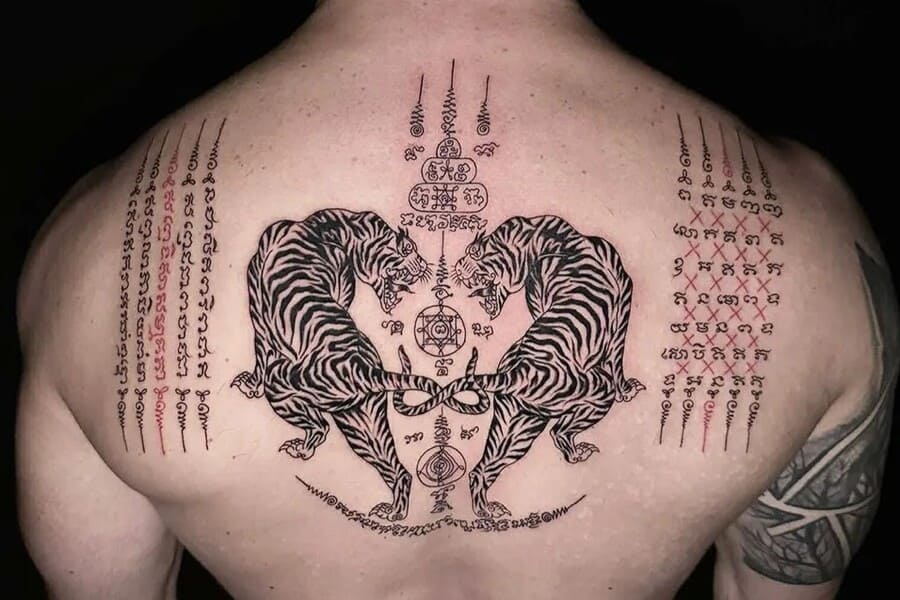
Historical records and temple murals across Myanmar, Thailand, Cambodia, and Laos all point to a widespread tradition of sacred tattooing among soldiers and warriors who sought divine protection before battle. Kings and rulers commissioned sak yant tattoos as marks of power and invincibility. Over time, the practice became accessible to ordinary people, with rural communities seeking blessings for health, prosperity, and protection from evil spirits.
Sak Yant in Myanmar and Southeast Asia
While sak yant tattoos are practiced across Myanmar, Thailand, Cambodia, and Laos, each country has developed its own regional nuances. In Myanmar, the tradition is sometimes referred to as "in" tattooing, and the masters who perform it are known as "hsaya" or spiritual teachers. Myanmar's version tends to be more strictly tied to Buddhist monastic culture than in some neighboring countries, with many practitioners operating within or adjacent to temple environments.
The practice in Myanmar is also notable for its use of traditional hand-tapping tools, typically a long metal or bamboo rod with a sharpened tip, which delivers ink in a rhythmic, meditative manner. This method is fundamentally different from modern electric tattooing and is considered essential to preserving the spiritual integrity of the design.
The History of Sak Yant Tattoos in Myanmar
Myanmar's history of sacred tattooing stretches back to the Pagan Empire period, roughly between the 9th and 13th centuries, when Buddhist culture became the dominant force shaping Burmese civilization. Temple inscriptions and royal chronicles from this era reference the use of protective tattoos among soldiers and members of the royal court. The sacred markings were believed to make the wearer invulnerable to swords and arrows, a belief that persisted well into the colonial era.
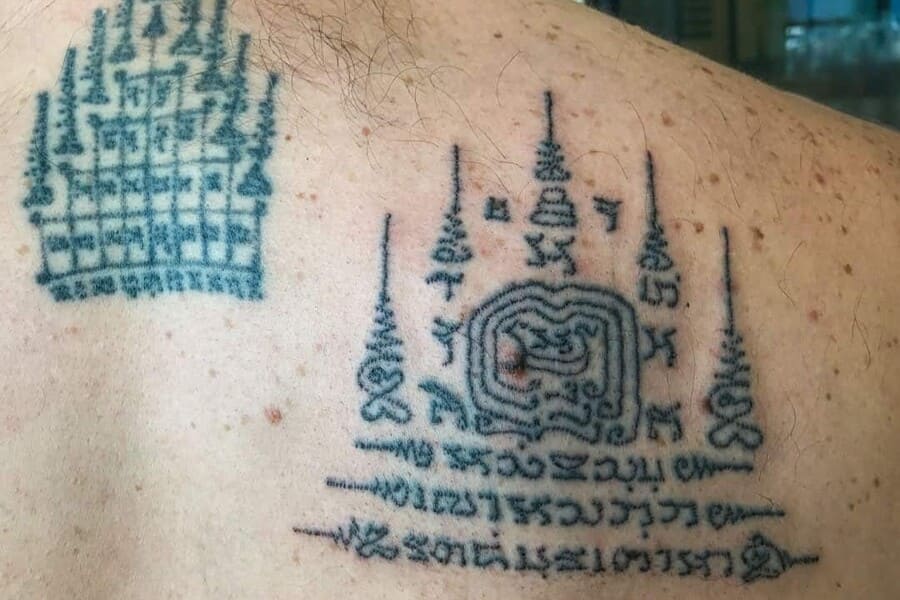
During the Konbaung Dynasty (1752 to 1885), sak yant practice flourished as a formalized spiritual tradition. Military commanders required their soldiers to receive specific protective tattoos before campaigns, and a network of respected spiritual masters existed throughout the country to provide these blessings. The tradition was not merely superstition but a deeply integrated aspect of Burmese statecraft and religious life.
The British colonial period introduced foreign skepticism toward indigenous spiritual practices, and while sak yant tattoos were never fully suppressed, the tradition was pushed to the margins of official life. Village communities and Buddhist monasteries became the primary custodians of the practice, ensuring its survival through generations of quiet transmission between masters and students.
In modern Myanmar, sak yant practice occupies an interesting cultural space. It is simultaneously ancient and living, accepted within mainstream Buddhist culture yet set apart by its esoteric knowledge requirements. The masters who practice it today are respected figures within their communities, often serving dual roles as spiritual counselors and healers. For the Burmese people, receiving a sak yant tattoo is not a fashion statement but a sacred commitment to a tradition with roots stretching across millennia.
Common Sak Yant Tattoo Designs and Their Meanings
The visual vocabulary of sak yant tattoos is rich and complex, drawing from Pali script, sacred geometry, cosmological symbolism, and representations of powerful animals. Each design carries specific spiritual purposes, and practitioners choose their tattoos based on personal needs, the master's recommendation, and spiritual compatibility.
Gao Yord (Nine Spires)
The Gao Yord, meaning "nine spires" or "nine peaks," is considered one of the most sacred and comprehensive of all sak yant designs. Represented as a series of nine pointed spires arranged in a stylized temple form, this tattoo contains multiple layers of meaning. The nine spires are said to represent the nine peaks of the mythological Mount Meru, the cosmic mountain at the center of Buddhist and Hindu cosmology.
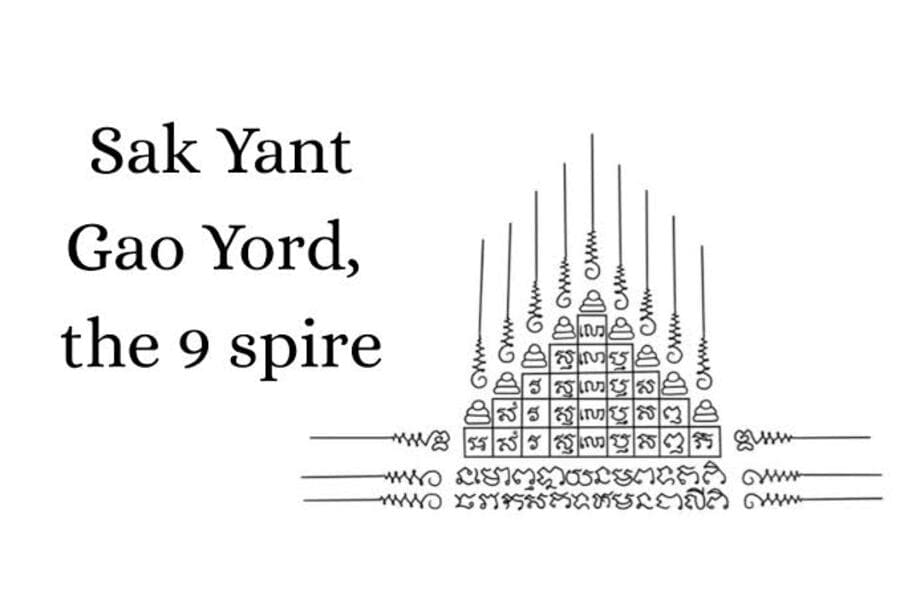
This design is typically placed on the upper back or at the nape of the neck, and it is believed to contain within it the essence of all other sak yant tattoos. It offers comprehensive protection, enhances the wearer's personal magnetism, and is said to attract the goodwill of others. For this reason, it is a popular choice among those receiving their first sak yant tattoo, as it serves as a powerful foundation for any future spiritual markings.
Hah Taew (Five Sacred Lines)
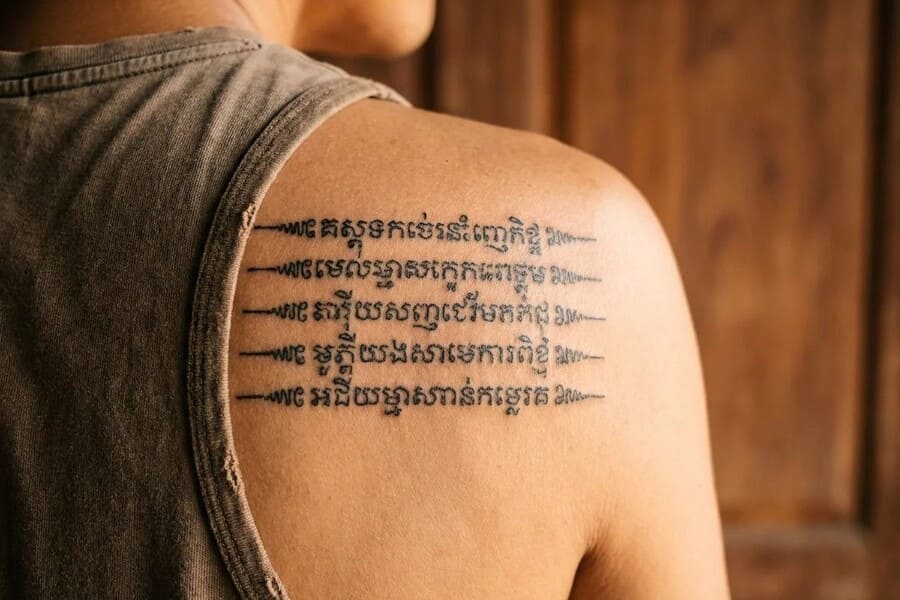
The Hah Taew, or "five sacred lines," is one of the most recognizable sak yant designs and holds deep spiritual significance within Myanmar's tradition. The design consists of five lines of Pali script, each line representing a distinct magical spell or blessing. Together, these five spells are believed to offer protection from evil spirits, grant good fortune, attract love and compassion from others, offer protection during travel, and enhance the wearer's charisma and personal power.
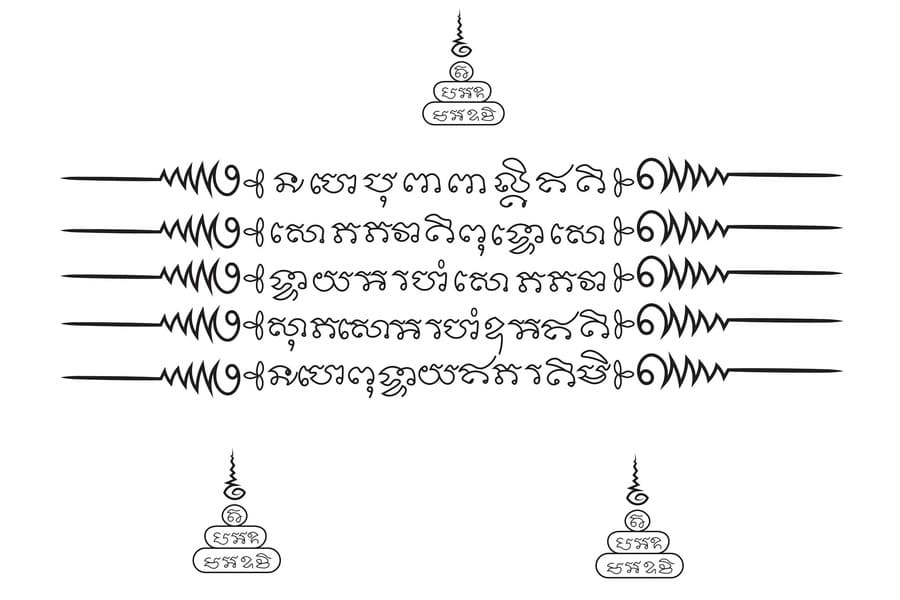
The Hah Taew is traditionally inscribed on the upper left shoulder and is one of the most frequently requested designs among both local Burmese and knowledgeable foreign visitors. The specific Pali text used varies between masters, as each spiritual teacher may use slightly different incantations passed down through their own lineage. This variation is part of what makes each sak yant tattoo genuinely unique and personally connected to the master who performed it.
Paed Tidt (Eight Directions)
The Paed Tidt, or "eight directions," is a circular sak yant design that represents spiritual protection from all directions. The design features eight segments, each containing sacred Pali script corresponding to one of the eight cardinal and intercardinal directions. At its center is typically a representation of the Buddha or a sacred geometric symbol.
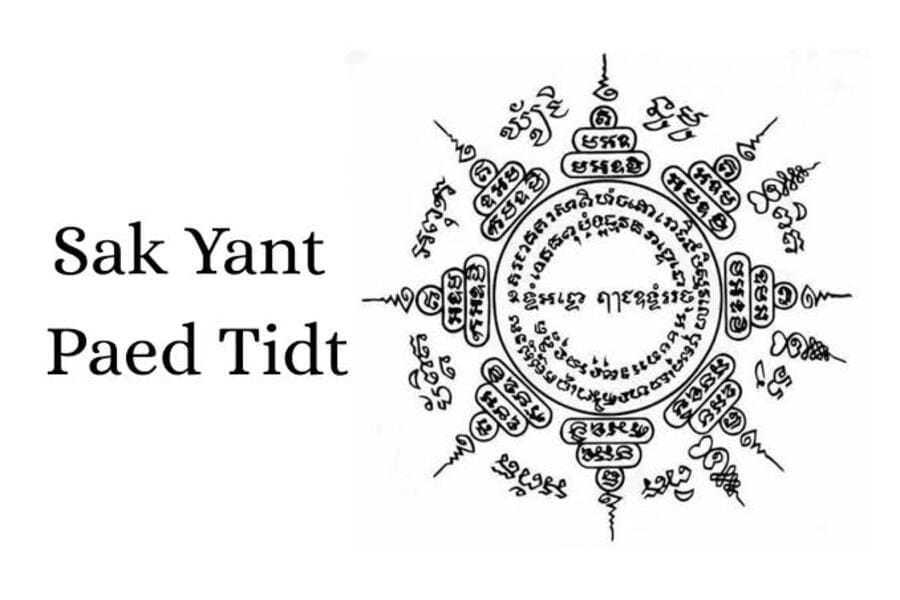
This design is particularly meaningful for travelers and those whose work takes them into unfamiliar or potentially dangerous environments. The belief is that the wearer is surrounded by spiritual protection no matter which direction they face or travel. In Myanmar's history, this was a popular tattoo among merchants who traveled trade routes through unfamiliar territories, and the tradition of wearing it for safe passage remains alive today.
Animal-Inspired Sak Yant Tattoos
Among the most visually striking of all sak yant tattoos are those featuring sacred animals. In Myanmar's tradition, animals are understood to embody specific spiritual qualities, and their representation in sak yant form is believed to transfer these qualities to the wearer.
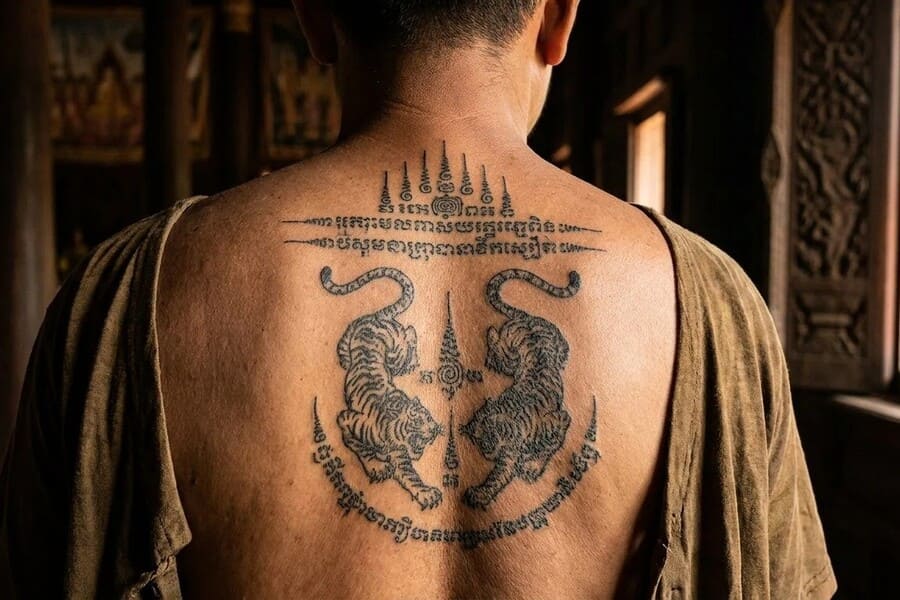
The tiger (Suea) is perhaps the most iconic, representing power, authority, and fearlessness. A wearer of the tiger sak yant is believed to command respect and possess physical courage. Historically, this was a common tattoo among soldiers and fighters. The Hanuman, the divine monkey from the Ramayana epic, represents strength, loyalty, and devotion. The crocodile offers protection near water and is common among fishermen and those who work in maritime environments. The Naga, a serpentine mythological creature, symbolizes wisdom, transformation, and protection of the home.
Each of these animal-inspired sak yant tattoos is accompanied by specific Pali incantations that activate the spiritual qualities associated with that creature. The animal imagery serves not merely as decoration but as a direct visual invocation of the spirit it represents.
Frequently Asked Questions About Sak Yant Tattoos
Are Sak Yant Tattoos Only for Buddhists?
No, sak yant tattoos are not exclusively for Buddhists, though their spiritual framework is deeply rooted in Theravada Buddhist teachings. In Myanmar, people of various faiths have received sak yant tattoos throughout history, including those from animist traditions and, in some cases, Christians and Muslims who appreciated the protective aspects without necessarily adopting Buddhist religious practice.
That said, the tradition is most meaningful when approached with sincere respect for its spiritual context. Recipients are generally expected to observe certain ethical guidelines, sometimes referred to as katas or rules, which may include behavioral commitments that align with Buddhist principles such as avoiding certain actions or foods. These commitments are part of honoring the spiritual contract between the wearer, the master, and the sacred design itself.
Do Sak Yant Tattoos Have Spiritual Power?
The question of whether sak yant tattoos possess genuine spiritual power is one that sits at the intersection of faith, tradition, and personal belief. Within Myanmar's cultural context, the spiritual efficacy of these tattoos is accepted as a matter of lived experience and collective tradition. Generations of families have received these markings and attributed positive life outcomes to them.
From a scholarly perspective, the power of sak yant tattoos can be understood through the lens of ritual efficacy: the combination of sacred intention, spiritual authority, and genuine belief creates a meaningful psychological and spiritual framework that has real effects on how people carry themselves and navigate their lives. Whether one approaches it through faith or cultural appreciation, the tradition deserves to be treated with sincere respect rather than superficial curiosity.
Can Foreign Travelers Get a Sak Yant Tattoo in Myanmar?
Yes, foreign travelers can receive a sak yant tattoo in Myanmar, though the process requires thoughtful preparation and a genuine attitude of respect. Unlike some tourist-facing experiences in neighboring countries, Myanmar's sak yant masters typically operate within community and temple contexts, and finding an authentic practitioner requires local guidance rather than a simple online search.
The most respectful approach is to connect with a knowledgeable local guide or cultural contact who can facilitate an introduction to a reputable master. Dress modestly when visiting, bring appropriate offerings (typically flowers, incense, and a donation), and be prepared to listen carefully to the master's guidance regarding which design is appropriate for you. Going in with a specific design already decided upon, as though ordering from a menu, is generally considered disrespectful. Allow the master to recommend a design based on your personal energy and spiritual needs.
It is also worth noting that the hand-tapping method used in traditional Myanmar sak yant tattooing is less precisely controlled than modern electric tattooing, which means the result may look different from what Western travelers are accustomed to. This is part of the authenticity of the experience.
What Is the Most Popular Sak Yant Tattoo Design?
Among those seeking their first sak yant tattoo in Myanmar, the Gao Yord (nine spires) and Hah Taew (five sacred lines) are consistently the most requested designs. The Gao Yord is often recommended by masters as the ideal starting point because of its comprehensive spiritual coverage, while the Hah Taew is valued for its elegantly structured blessings.
For experienced recipients or those with specific spiritual needs, tiger designs and directional yants such as the Paed Tidt are also widely sought. Ultimately, the most appropriate design for any individual is best determined in consultation with the tattooing master, who brings their own lineage of knowledge and spiritual discernment to the process. The personal recommendation of a trusted master is considered far more meaningful than personal preference when it comes to choosing a sak yant tattoo.
Myanmar's tradition of sak yant tattoos represents one of the most profound intersections of art, spirituality, and cultural identity in all of Southeast Asia. For those willing to approach this tradition with patience, humility, and genuine respect, the experience offers something that no tourist attraction or souvenir can replicate: a living connection to an ancient spiritual heritage that continues to guide and protect those who honor it.