
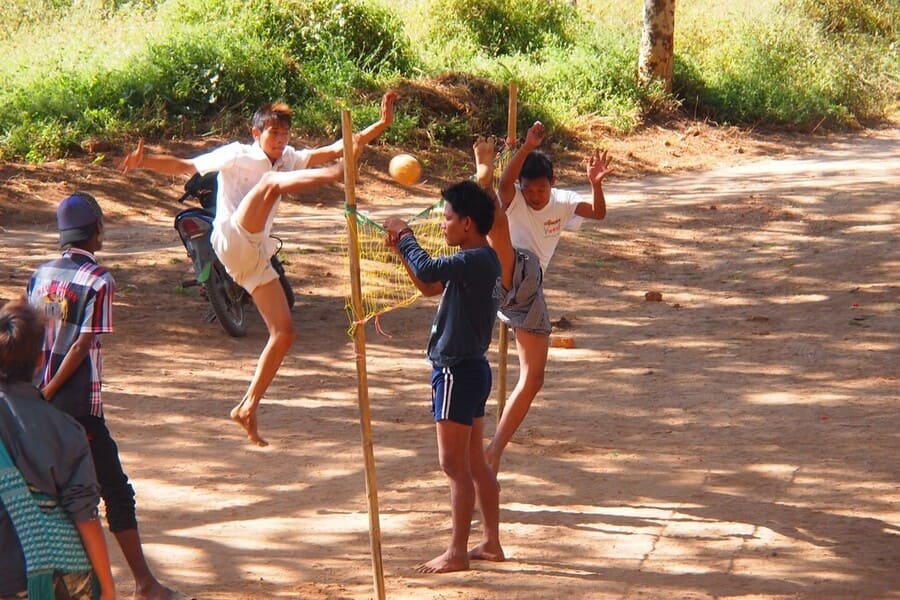
Walk through any neighborhood in Yangon or Mandalay in the late afternoon and you will likely hear it before you see it: the soft, rhythmic thud of a rattan ball being passed between bare feet, knees, and shoulders in a tight circle of players. This is chinlone, one of Southeast Asia's most graceful and least understood traditional sports. For travelers exploring Myanmar tours beyond the temples of Bagan and the lakes of Inle, watching or even trying chinlone offers a rare window into the country's everyday culture, one built on cooperation, artistry, and community rather than competition alone.
What Is Chinlone?
Chinlone is a traditional Burmese sport that combines elements of a team game and a solo performance art. Played with a woven rattan ball, it is widely regarded as Myanmar's national sport and one of the country's most distinctive cultural exports. Unlike most ball sports, chinlone is not primarily about winning or scoring against an opponent. Instead, it emphasizes grace, control, and the collective rhythm of a team working together to keep the ball airborne using only their feet, knees, chest, and head, never their hands or arms.
The word "chinlone" refers both to the sport itself and to the ball used to play it, which is woven from strips of rattan cane, giving rise to its other common name, the cane ball sport. In Myanmar, chinlone is far more than recreation. It is deeply woven into social life, religious festivals, and even spiritual practice, often performed as an offering during pagoda celebrations. For anyone researching traditional sport in Myanmar, chinlone consistently stands out as the most culturally significant and visually striking example.
The History of Chinlone
The origins of chinlone stretch back roughly 1,500 years, with historical records and oral traditions suggesting the game was played in royal courts during the early Pyu and Bagan dynasties. Some historians believe it may have developed from earlier ball-kicking games that spread through Southeast Asia along ancient trade routes, evolving over centuries into a distinctly Burmese art form.
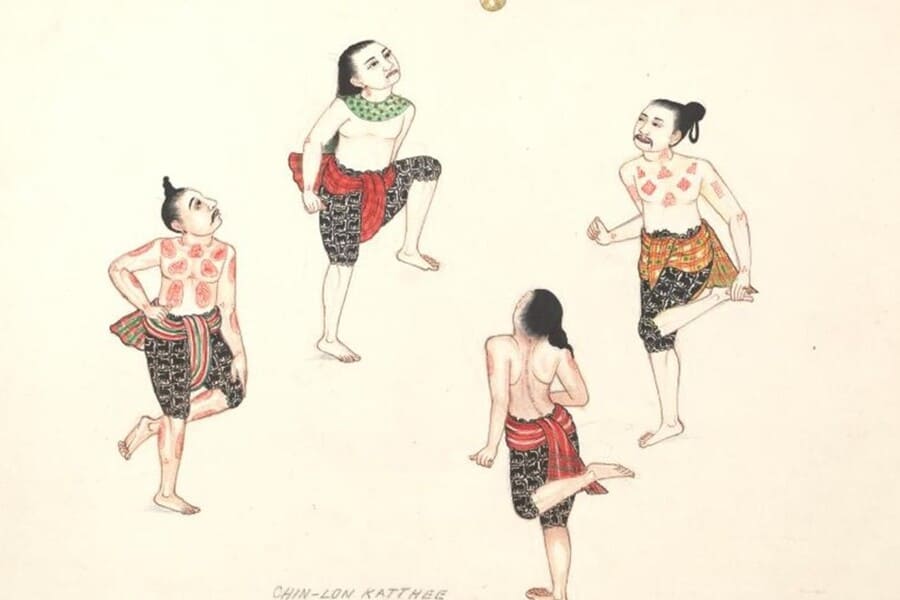
Historically, chinlone was closely associated with Buddhist festivals and royal entertainment. Court records and temple murals from the Bagan period depict figures engaged in circular ball games remarkably similar to modern chinlone, suggesting the sport's aesthetic and spiritual character was established very early in its history. Over time, it moved from palace courtyards into village squares, becoming accessible to ordinary citizens and cementing its place as a genuine Myanmar traditional game enjoyed across all social classes.
Today, chinlone remains one of the clearest threads connecting modern Myanmar to its ancient cultural roots, and it continues to be passed down informally, often taught by parents and grandparents rather than through formal coaching academies.
How Is Myanmar National Sport Played?
Basic rules of the game
At its core, chinlone is played by keeping a rattan ball continuously in the air without letting it touch the ground, using any part of the body except the hands and arms. There is no opposing team trying to intercept the ball, no goalposts, and no scoreboard in the traditional circle format. Success is measured by how long the ball stays airborne and how skillfully and stylishly each player executes their touches.
This non-competitive structure surprises many first-time visitors. Rather than a contest between two sides, a chinlone circle is a shared performance, where each player takes a turn showcasing a technique while teammates support the rhythm by keeping the ball moving smoothly.
Team size and player positions
A standard chinlone team consists of six players who form a circle roughly six to seven meters in diameter. One player at a time moves to the center of the circle to perform a solo sequence of kicks and flourishes, while the remaining five players stand around the perimeter, feeding the ball back with clean, controlled touches to keep the momentum going.
Rotation through the center position happens continuously throughout the game, giving every player an opportunity to display individual skill while the team as a whole maintains the flow. This structure is part of why chinlone is often described as a blend of sport and dance, since teamwork and individual artistry are equally essential.
The cane ball used in Chinlone
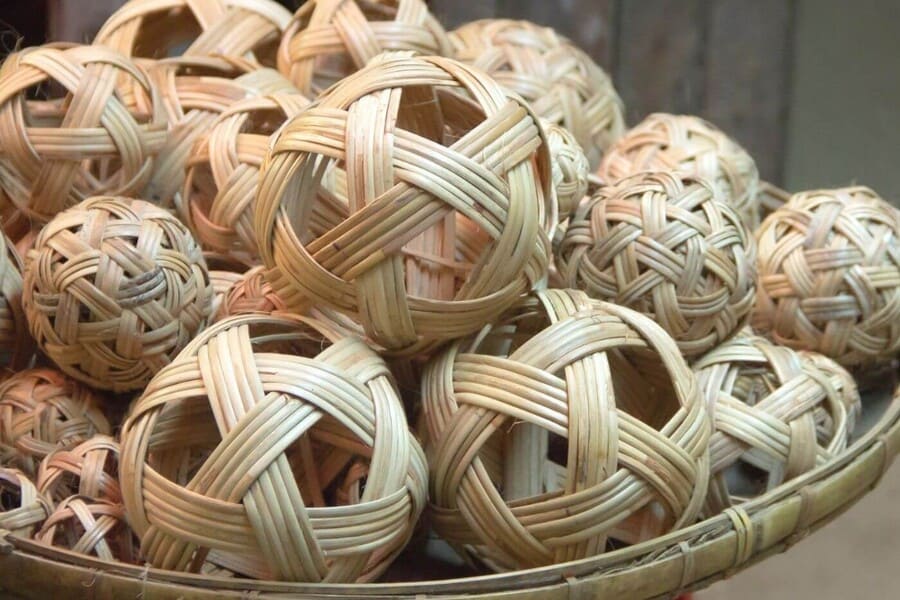
The ball itself is a defining feature of the sport. Traditionally handwoven from strips of rattan cane into a hollow spherical shape with a distinctive lattice pattern, the ball weighs very little, typically under 250 grams, and measures around 12 to 13 centimeters in diameter. Its open, woven construction makes it lightweight enough to control with soft touches, yet durable enough to withstand thousands of kicks during a single session.
Skilled artisans in Myanmar still hand-weave chinlone balls using techniques passed down through generations, and buying one from a local market is a popular and meaningful souvenir for visitors interested in Burmese craftsmanship.
Skills and Techniques in Chinlone
Common kicking techniques
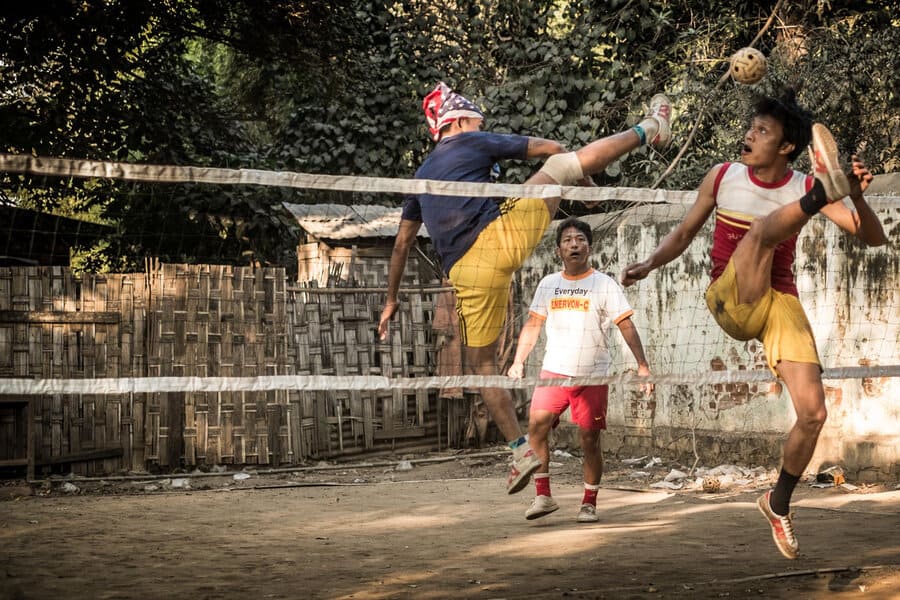
Chinlone technique is built around dozens of named kicks, each requiring precise timing and body control. Common techniques include the instep kick, the sole kick, the knee lift, and more advanced maneuvers where players strike the ball with the heel while facing away from it. Advanced players often chain several techniques together in a single fluid sequence, transitioning from foot to knee to shoulder without ever losing control of the ball.
Balance, rhythm, and teamwork
Because chinlone has no opposing team to defend against, success depends almost entirely on internal discipline: balance, timing, and awareness of teammates. Players must anticipate where the ball will travel and position themselves accordingly, all while maintaining a relaxed, almost meditative composure. This emphasis on rhythm and shared awareness is part of what gives Myanmar national sport its distinctive character compared to more overtly competitive Myanmar traditional games.
Freestyle performances
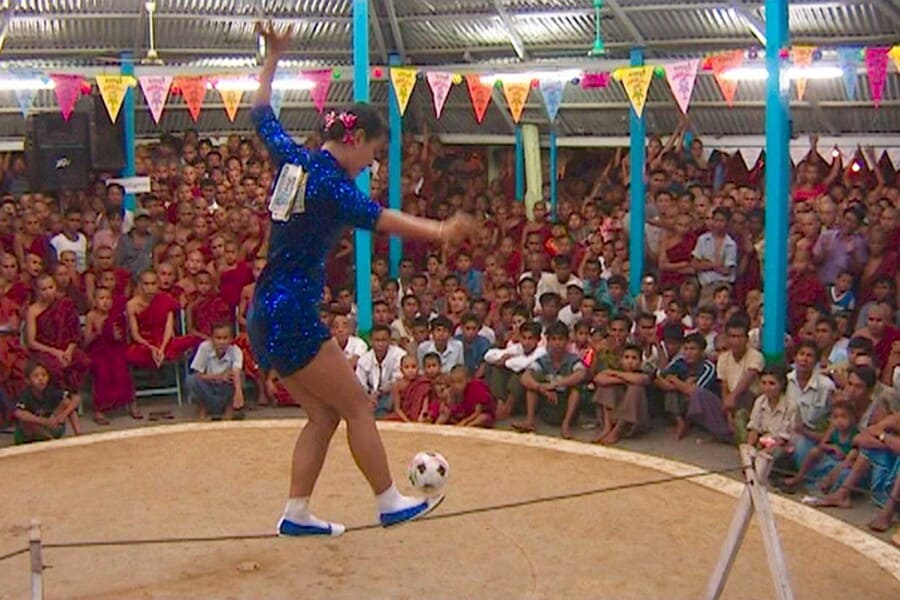
Beyond the standard circle format, chinlone also includes a freestyle solo discipline in which a single player performs an extended, choreographed sequence of tricks while keeping the ball continuously airborne. These freestyle routines, often performed to traditional Burmese music, showcase extraordinary flexibility and control, and are frequently the centerpiece of festival exhibitions and cultural performances for both local audiences and travelers.
Where Can You Watch or Experience Chinlone in Myanmar?
Cultural festivals
The most vivid displays of chinlone typically occur during major Buddhist festivals, particularly around pagoda celebrations and the Thadingyut Festival of Lights in October. During these events, teams perform in the grounds of pagodas as a form of devotional entertainment, drawing large crowds of locals and offering visitors an authentic, unstaged look at the sport.
Local parks and communities
Outside of festival season, chinlone is easy to spot in everyday life. Public parks, temple courtyards, and open spaces in cities like Yangon and Mandalay regularly host informal games in the early morning or late afternoon, when the heat has eased. These casual gatherings are one of the best ways to see the sport in its most natural, community-driven form, and players are generally welcoming to curious onlookers.
Traditional performances for visitors
For travelers with limited time, several cultural centers and heritage tour operators in Myanmar arrange scheduled chinlone demonstrations, often paired with traditional music or dance performances. These organized shows offer a reliable way to witness high-level technique up close, particularly for visitors whose itineraries do not allow time to seek out informal neighborhood games.
Interesting Facts About Myanmar National Sport
National recognition
Chinlone holds a special place in Myanmar's cultural identity and is broadly recognized as the country's national sport, even though it lacks the formalized scoring structure of most nationally designated sports. Its widespread popularity and deep historical roots have made it a genuine symbol of Burmese heritage, referenced in cultural documentation and promoted by the country's tourism sector as a signature experience.
The artistry behind the game
What sets chinlone apart from most ball games is its dual identity as both sport and performing art. Judges at formal exhibitions and competitions often score players on elegance, creativity, and fluidity of movement rather than purely athletic outcomes, placing Myanmar national sport closer to gymnastics or dance in spirit than to conventional team sports.
Chinlone in international events
While chinlone remains most prominent within Myanmar, it has been featured in regional cultural exchanges and Southeast Asian heritage showcases, helping introduce the sport to international audiences. Some competitive variants have also been adapted for exhibition matches abroad, though the traditional circle format remains the version most closely tied to Burmese identity.
Tips for Travelers Interested in Chinlone
Best places to see a match
Yangon's public parks, such as those surrounding the Shwedagon Pagoda, and open spaces in Mandalay are reliable spots to catch informal games, particularly in the cooler hours of the day. Travelers planning Myanmar tours around October festival dates have the best chance of seeing large-scale, formally organized performances.
Can tourists try Chinlone?
Yes, and many visitors find it one of the most memorable parts of their trip. Local players are often happy to invite curious travelers into a casual circle, especially in parks where games are already underway. It requires no special equipment beyond bare or socked feet, and even a few clumsy attempts are usually met with encouragement rather than judgment.
Etiquette when joining local games
Visitors should approach with humility rather than treating the game as a novelty photo opportunity. Watching quietly for a few minutes before asking to join, removing footwear if that is the local custom, and following the lead of more experienced players are all appreciated gestures. As with many community activities in Myanmar, patience and genuine interest go a long way toward a positive shared experience.
Frequently Asked Questions About Chinlone
Is Chinlone the national sport of Myanmar?
Yes, chinlone is widely regarded as Myanmar's national sport, celebrated for its deep historical roots and its unique blend of athletic skill and artistic performance.
What is the difference between Chinlone and sepak takraw?
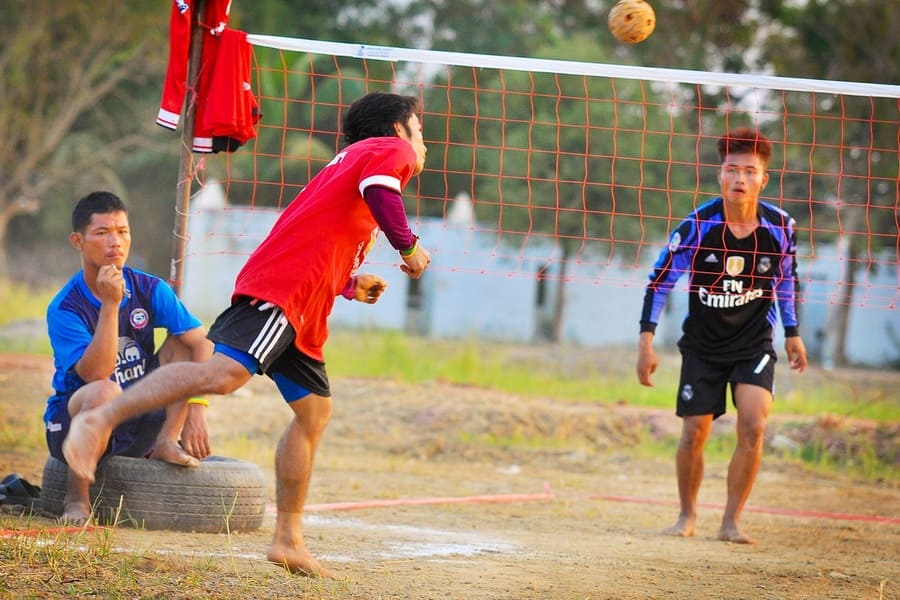
While both games involve a rattan ball played primarily with the feet, sepak takraw is a competitive, net-based sport similar to volleyball, played between two opposing teams trying to score points. Chinlone, by contrast, is traditionally non-competitive, played in a circle format that emphasizes cooperative rhythm and individual style over winning against an opponent.
What is the ball made of?
The traditional chinlone ball is handwoven from strips of rattan cane into a lightweight, hollow lattice sphere, a craft that has been practiced in Myanmar for generations.
Is Chinlone competitive or artistic?
It can be both, though its traditional and most widely practiced form is artistic rather than competitive. Some modern variations incorporate scoring systems, but the classic circle format prioritizes elegance, timing, and teamwork.
Can beginners learn Chinlone?
Absolutely. Chinlone is accessible to beginners because it does not require expensive equipment or a formal facility, and the learning curve is gradual. Many Burmese children learn simply by joining family or neighborhood games, and visitors can pick up the basics in a single afternoon session with patient local players.
Chinlone remains one of Myanmar's most authentic cultural experiences, a living tradition that continues to be practiced daily in parks, pagoda grounds, and village squares across the country. For travelers seeking a deeper connection to Burmese heritage beyond typical sightseeing, spending an afternoon watching, or even joining, a game of myanmar national sport offers insight into the values of community, discipline, and artistry that continue to shape everyday life in Myanmar.